
A wee story about Posy Luna
The how to the why and the when to the where
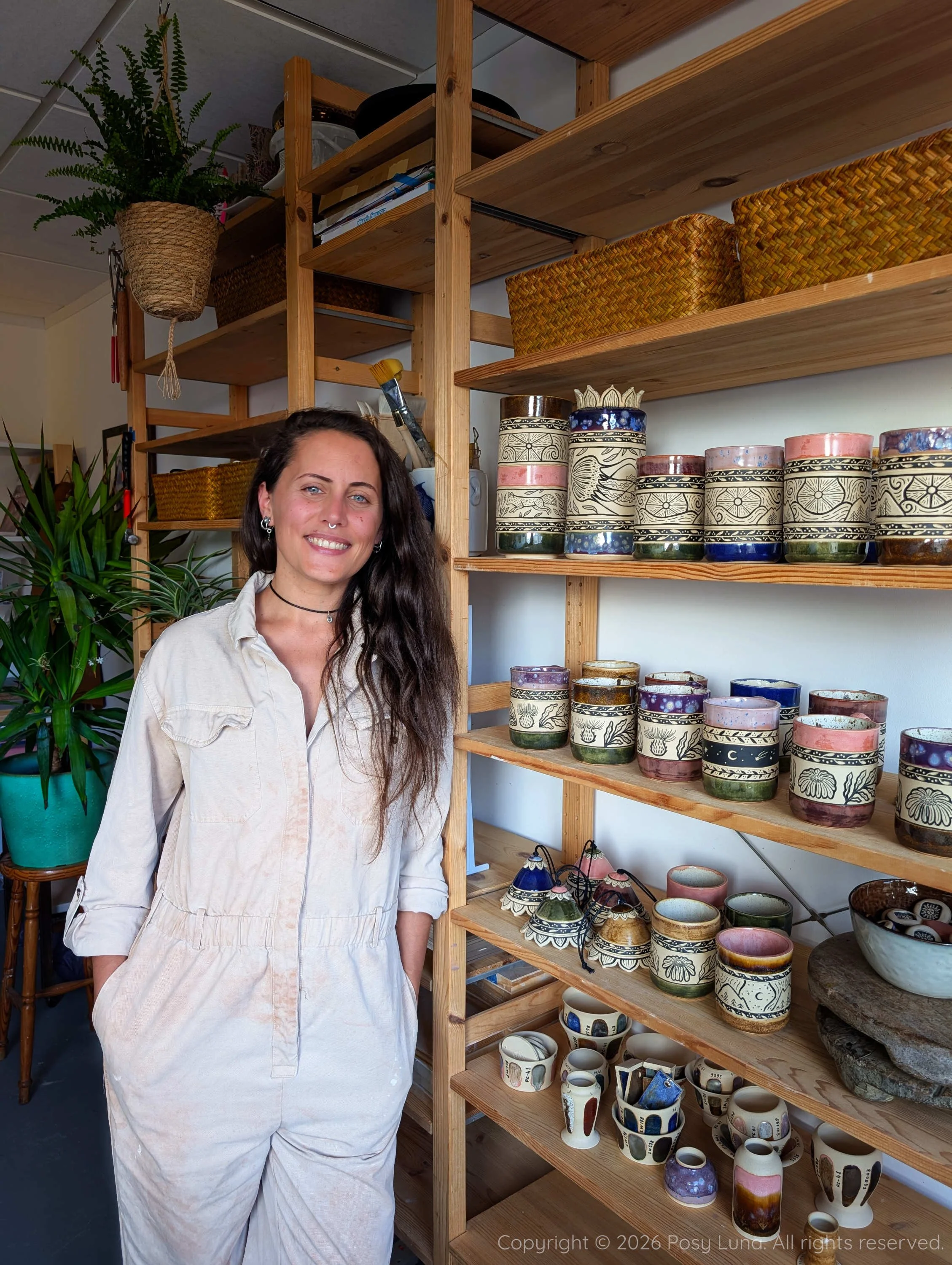
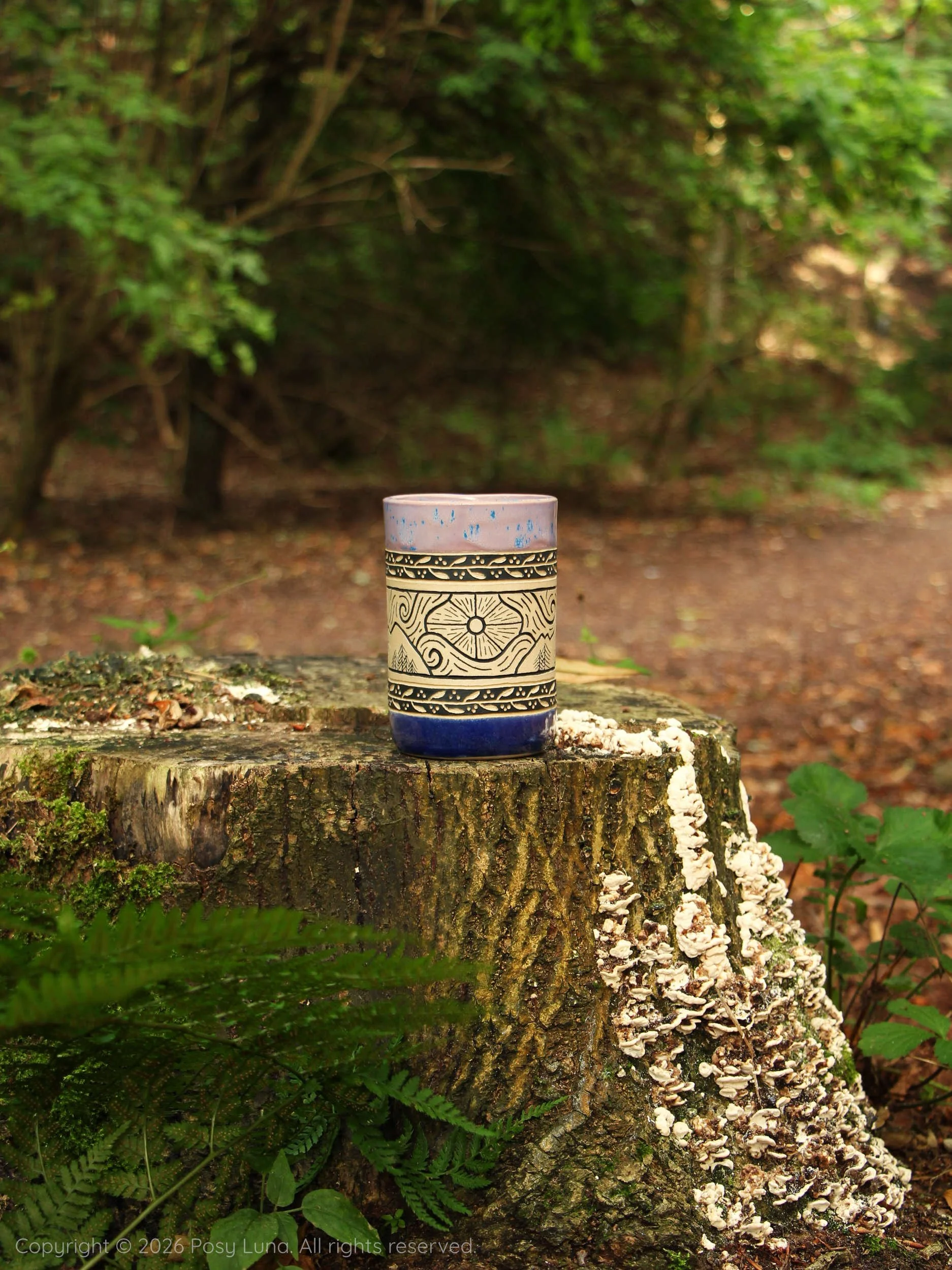
Background :
Vanessa M. grew up in France and graduated in Graphic Design from l’École de Condé (Bordeaux) in 2012 then travelled the world for a few years before settling in Scotland in 2017 where she has called Edinburgh home ever since.
After exploring a variety of mediums such as painting and jewellery making, she converged to illustration (both digital and traditional) and created Posy Luna in 2022. Starting in the corner of her bedroom, with all the tools necessary to print and package her own art, her practice developed steadily until she settled in her own studio space within the WASPS artists’ community.
With extra space and utilities, the possibility opened gradually to an exciting (and messy) new medium : her illustrations started to migrate from paper to clay. After a brief wheel-throwing course and a practice of several months that didn’t quite feel right, she taught herself hand-building and things finally clicked into place.
Two years in total is what it took to finally find her voice through ceramics, each piece taking 6-12 hours (spread out over approx. 1 month) to make from start to finish, carving the illustrations being the longest part.
About the process :
Slab building :
As the name suggests, this process starts by flattening a slab of clay with a roller before cutting the different parts to make an object and assembling them all together using slip (liquid clay) as a glue.
Carving :
Vanessa mixes in her work two ancient techniques used by generations of potters and ceramicists :
- The first one is called Sgraffito and consists of scratching the surface off a layer of coloured medium to reveal the clay underneath.
- The second one is called Mishima and works the other way around by engraving a pattern directly into the clay and inlaying the grooves with a contrasting medium.
Glazing :
Being a lover of colourful art, Vanessa glazes her pieces with 2 to 4 different coloured glazes, brushed on by hand and each requiring up to 4 layers of application.
Firing :
Each piece of ceramic is fired twice.
The first firing happens after carving, once the clay has previously dried for 24 hours it can go into the kiln for 12 hours at 1000c to reach bisque stage, it means most moisture will have evaporated and the clay is now hard, porous and ready to absorb glaze. The second firing happens after glazing, the pieces will go back into the kiln for a shorter but higher temperature firing at 1250c to melt the glaze into glass and fuse it to the clay.
Artist’s note :
Isn’t it all perfectly magical?
Every day in the studio never ceases to amaze me and what greater feeling could ever be had while creating art of any sort.
Ceramics in particular gives me the impression of being a true witch that summons the four elements into my power for a split moment of bliss before it changes hands and lives in the homes of other sorcerers.
All it takes is a mount of earth, shaped with water and my hands, dried in the wind before being thrown into the fire pit and emerging as a solid object that could maybe survive hundreds of years before its shards are rediscovered under a weeping willow tree.
I love stories and this last one is a favourite, but the thought of someone having their morning coffee into one of my mugs or hanging one of my wind chimes into their family garden brings me just as much joy.
If you read this far, just know that I thank you. Whether you are considering buying a piece or not I appreciate you taking a look into my little enchanted world and I hope you enjoyed it ♡